
By Sarah Spink, Head of Primary English, and Michlyn Caffrey, Head of Secondary English, Ark Curriculum Plus
The role of literature changes as pupils progress from primary into secondary school. The need to choose it deliberately does not.
There are few decisions in an English curriculum more exciting than choosing the books pupils will study. There are also few that are more consequential.
Thousands of children’s books are published every year. The challenge is rarely finding a good book. It is deciding which books deserve a place in the curriculum, where they sit, what they contribute, and what pupils gain from encountering them.
The National Year of Reading i and the House of Commons Education Committee’s report on reading for pleasure ii reinforce the importance of the reading experiences schools provide. And, with a new National Curriculum on the horizon, this is a timely moment for schools to review their literature spines. For leaders, that means asking whether the literature spine is doing everything it could.
At Ark Curriculum Plus, choosing and sequencing literature is a key part of our approach to curriculum design across our English Mastery programmes.
A good book is not automatically the right curriculum choice.
In primary, literature is central to developing pupils as readers. Carefully chosen books can develop vocabulary and fluency, build background knowledge, introduce pupils to new ideas and perspectives, expose them to increasingly complex language, and help them experience the possibilities of stories, poetry and other literary forms.
In secondary, literature increasingly becomes an object of disciplinary study. Pupils attend more closely to language, literature, form, genre, context, interpretation and ideas, developing the knowledge and analytical practices of literary study.
The emphasis changes, but the underlying principle does not. Across English Mastery Primary and Secondary, we select and sequence literature deliberately, considering what each text brings to pupils’ developing experience of literature.
Here are six questions worth considering when reviewing your school’s literature spine.
Review your own literature spine
Our accompanying Literature Curriculum Audit turns these six questions into a practical tool for reviewing individual texts and your curriculum as a whole.
Download the Literature Curriculum Audit
1) Why this text? Choosing texts with purpose
💡 Core idea
Choose texts for what makes them worth teaching, not simply because they are good books.
A book can be enjoyable, beautifully written or widely loved and still not be the right choice for a particular curriculum. The starting point is: What makes this text worth teaching?
The DfE’s Reading Framework iii encourages schools to consider whether a book offers a “big” idea, diverse voices or characters, rich language, wider knowledge, opportunities to widen pupils’ horizons, or an experience of different genres and forms. These prompt us to be more precise about what we want a particular book to contribute and ask ourselves: “What makes the text worth teaching?”
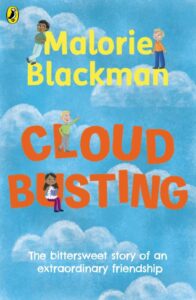
Cloud Busting by Malorie Blackman
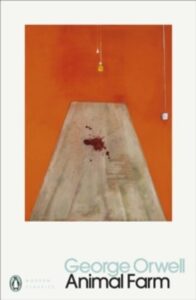
Animal Farm by George Orwell
In English Mastery Primary, Cloud Busting was selected in Year 3 because the entire story is told through poetry. Its sustained narrative gives pupils an opportunity to experience poetry as a form capable of carrying a complete story, while exploring rhythm, language and perspective.
In English Mastery Secondary, Animal Farm was selected in Year 8 not simply because it is a well-known modern classic, but because of the distinctive disciplinary knowledge it develops. Through Orwell’s allegory, pupils explore how writers use symbolism, satire and narrative to critique society and political systems. The text offers a sophisticated introduction to ideas about power, corruption, propaganda and manipulation that continue to resonate throughout later literary study.
2) Why here? Sequencing literature across the curriculum
💡 Core idea
A strong literature spine is a sequence, not a collection. A text’s value depends not only on what it contains, but on what it connects to.
This means asking not only Why this book? but Why this book here?
A text may introduce a new genre, deepen an idea encountered previously, provide a contrasting perspective, prepare pupils for a later text, or connect with knowledge being developed elsewhere in the curriculum.
The EEF iv highlight the importance of considering what pupils already know, aligning texts with curriculum content, reactivating relevant prior knowledge and introducing new knowledge and vocabulary where needed. A recent ‘What Good Readers Know’ v article makes the connection even more directly: “Reading comprehension and higher-order thinking are inseparable from background knowledge.”
The implication for literature selection is significant. A text can be valuable because of what it contains. It can be even more valuable because of what it connects to.
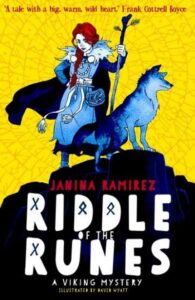
Riddle of the Runes by Janina Ramirez
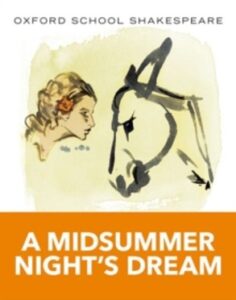
A Midsummer Night’s Dream by William Shakespeare
In Year 5, Riddle of the Runes sits alongside pupils’ study of Viking history. The literature therefore connects with knowledge pupils are developing elsewhere, allowing vocabulary, ideas and historical knowledge to be encountered and used across contexts.
In English Mastery Secondary, the literature spine is deliberately organised around developing conceptual complexity. In Year 7, pupils explore morality through texts including Oliver Twist and A Midsummer Night’s Dream. In Year 8, they encounter the idea of duality through The Tempest and Animal Farm. In Year 9, multiplicity is explored through texts including Small Island, Purple Hibiscus and comparative poetry.
3) What makes it ambitious? Looking beyond difficulty
💡 Core idea
Ambition is not the same as difficulty. Choose texts that stretch pupils’ language, knowledge, thinking and understanding of literature.
It is tempting to equate reading age, vocabulary or apparent difficulty. But textual complexity is more multidimensional than that.
The DfE English Research Review vi highlights linguistic features, knowledge, cultural references, connections, and different levels of meaning as aspects of complexity. Research from the Institute of Education vii similarly distinguishes between textual and linguistic demands and the complexity of content.
A text might therefore be ambitious in different ways:
- Linguistically: through rich vocabulary, complex syntax or distinctive authorial choices.
- Conceptually: through unfamiliar or challenging ideas.
- Structurally: through perspective, chronology, form or genre.
- Intellectually: through ambiguity, competing viewpoints or questions without easy answers.
- Experientially: through unfamiliar worlds, lives or perspectives.
A text that is easy to decode can still be difficult to understand. Equally, a text with relatively simple language can demand sophisticated thinking. So rather than asking simply whether a text is “challenging”, we should ask: What, specifically, does the text ask pupils to understand, notice, interpret or think about?
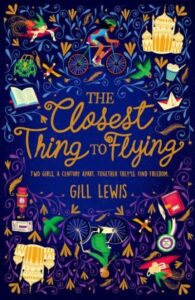
The Closest Thing to Flying by Gill Lewis
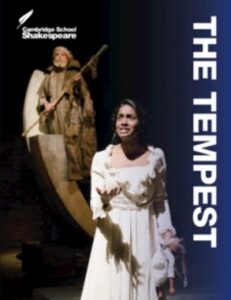
The Tempest by William Shakespeare
In Year 6, The Closest Thing to Flying uses an epistolary narrative to tell stories set in two different time periods, requiring pupils to navigate different voices, perspectives and historical contexts while making connections between them. The structure invites pupils to notice parallels and contrasts, and gradually piece together how the two narratives relate to one another. Its ambition comes from the sophisticated reading and thinking it demands.
The ambition of studying The Tempest in Year 8 lies far beyond Shakespearean vocabulary. Pupils grapple with questions of power, colonialism, identity, freedom and forgiveness while learning to interpret dramatic methods such as symbolism, soliloquy and characterisation. The text invites competing interpretations of characters such as Prospero and Caliban and introduces students to debates that continue to shape literary criticism today.
4) What does it contribute? Building a cumulative experience of literature.
💡 Core idea
A literature spine needs more than good individual texts. Each text should add something distinctive to pupils’ cumulative experience of literature.
A literature spine is more than a collection of individually good books. Once texts are chosen, we need to step back and ask what they are doing together.
What genres and forms will pupils encounter? What knowledge will accumulate? Which themes will recur and deepen? Where will pupils encounter literary heritage and contemporary voices? Which perspectives are represented? And, crucially, which texts offer something distinctive that pupils would otherwise miss?
Ofsted’s English research review viii emphasises the importance of carefully chosen and sequenced texts that build knowledge and connections, alongside breadth and increasing complexity in genre, style, narrative structure and themes.
This means that every text should contribute something distinctive.
The value of a literature choice does not end when the final page is turned. It can leave something behind. A new word. A piece of knowledge. A way of seeing another person’s experience. A literary form pupils can recognise elsewhere. A question they continue to think about, or a connection to another book.
The question, then, is not simply “Is this a valuable text?” It is “What does this text add to pupils’ cumulative experience of literature that they might otherwise miss?”
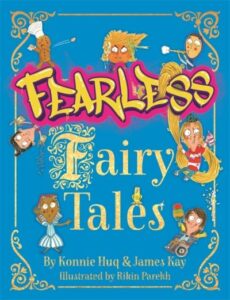
Fearless Fairy Tales by Konnie Huq & James Kay
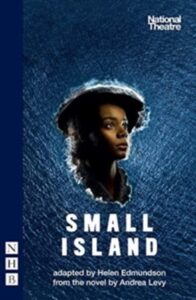
Small Island by Andrea Levy
In Key Stage 2, Fearless Fairy Tales brings contemporary retellings into conversation with traditional fairy tales. Pupils can consider how stories change over time, how stereotypes and gender expectations are constructed, and how writers can adapt, challenge and transform familiar stories. Its contribution lies partly in helping pupils see familiar stories differently.
Across Key Stage 3, pupils encounter Victorian novels and short stories through texts such as Oliver Twist and Sherlock Holmes, Shakespearean comedy through A Midsummer Night’s Dream, Shakespearean drama through The Tempest, modern allegory through Animal Farm, contemporary global fiction through Purple Hibiscus, modern drama through Small Island, and poetry from different periods and traditions. Each text has its own purpose. Together, they build a progressively richer understanding of genre, form, context and interpretation.
5) Who does it open the door to? Broadening perspectives.
💡 Core idea
No single text can represent everything. What matters is the range of lives, voices and perspectives pupils encounter across the literature spine.
The idea of literature as both a “mirror” and a “window” has been influential in thinking about children’s reading for decades. Rudine Sims Bishop’s ix work describes how books can reflect children’s own lives while also offering windows into experiences and perspectives different from their own and the House of Commons Education Committee’s 2026 report on reading for pleasure draws on this longstanding idea.
For school leaders, this means thinking beyond any individual text. Over time, which pupils might see aspects of their own lives reflected? Which experiences will be unfamiliar? Whose voices and perspectives are represented, and whose are missing? And whose stories are pupils being invited to study as part of their literary education?
Representation is therefore part of curriculum design, not an additional consideration. No single book needs to represent every experience, and a diverse literature spine is not simply a checklist of identities. What matters is the cumulative experience pupils gain across the texts they study: the range of lives, cultures, voices and perspectives they encounter, and the opportunities they have to explore and interrogate them.
Recent research provides a useful reminder that representation does not happen automatically. CLPE’s Reflecting Realities 2025x survey found that 24% of children’s books published in the UK in 2024 featured a main character from a racially minoritised background, the highest proportion recorded by the project. While this represents significant progress, CLPE also highlights the uneven nature of that progress and the importance of considering the quality of representation alongside its quantity.
The newly published Reflecting Disability xi research provides a similar perspective on representation of people with disabilities. Looking at books for 3–11-year-olds published in the UK in 2024, it found that 10% featured people with disabilities in some way, but only 3.6% included at least one person with a disability as a core character – 42% featured them only in the background. The research highlights the importance of the depth and authenticity of representation, not simply its presence.
Lit in Colour’s xii Five-Year Progress Report found that the proportion of GCSE students studying books by authors of colour rose from 0.7% to 1.9% over the programme’s first five years. The report argues for greater opportunity for pupils to encounter literature by authors of colour.
Taken together, these findings point to a practical question for school leaders: what range of lives, voices and perspectives are pupils actually encountering through the literature spine? And does the literature spine give pupils access to stories, voices and perspectives they might not otherwise encounter?
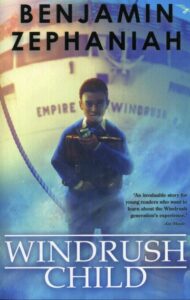
Windrush Child by Benjamin Zephaniah
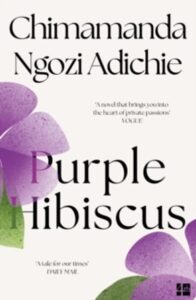
Purple Hibiscus by Chimamanda Ngozi Adichie
In Year 6, Windrush Child introduces pupils to Benjamin Zephaniah’s account of Leonard’s journey from Jamaica to Britain, exploring migration, racism, belonging and injustice alongside modern British history. It is one part of a wider spine rather than a text expected to represent an entire experience.
In Key Stage 3, texts such as Dickens’s work on poverty and injustice, Shakespeare’s exploration of power and authority, Small Island and the Windrush generation, and Purple Hibiscus and its exploration of identity, religion and freedom contribute to a wider range of perspectives and experiences.
6) Can everyone access it? Removing barriers without lowering expectations.
💡 Core idea
Accessibility does not mean lowering the level of challenge. It means giving every pupil the support they need to meet it.
Ambition and accessibility are not opposites. The Institute of Education Sciences (IES) distinguishes between textual and linguistic demands and content demands. A text can be relatively straightforward to decode but difficult to understand because its ideas are complex, abstract or unfamiliar. Equally, a text may present significant linguistic demands while offering ideas pupils can engage with readily.
The answer to a challenging text is not necessarily to choose an easier one; it may be to provide the knowledge, vocabulary, fluency practice, modelling, discussion and scaffolding pupils need to access it. The EEF similarly recommends careful text choice at an appropriate level of challenge, while emphasising that pupils come to texts with different levels of background knowledge.
This means accessibility is not simply a property of the book. It is also shaped by what we do around it: the knowledge we build, the language we teach, the support we provide and the opportunities pupils have to practise and discuss.
The goal is not to lower the ceiling. It is to build the staircase.
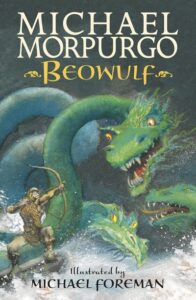
Beowulf by Michael Morpurgo
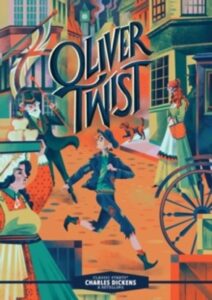
Oliver Twist by Charles Dickens
In English Mastery Primary, the decision to teach Beowulf in Year 5 illustrates this. An ambitious text can initially raise questions about access, particularly for pupils who may not yet have the fluency, vocabulary or background knowledge needed to engage independently with it. Explicit fluency work, direct teaching of vocabulary and background knowledge, and the use of accessible graphic novel versions can help pupils enter the text without lowering its intellectual ambition.
English Mastery Secondary similarly retains ambitious texts such as Oliver Twist, The Tempest and Purple Hibiscus, while providing different forms of support. Explicit vocabulary and knowledge teaching, modelling, analytical writing support, alternative formats and Foundation pathways help pupils access the same rich intellectual experiences.
Choosing deliberately does not take the joy out of reading
Deliberate curriculum design and reading for pleasure are not competing priorities. Choosing literature carefully is one way schools can create the conditions for pupils to develop rich and lasting relationships with reading.
Children themselves describe reading in terms of imagination, freedom and being transported into other worlds. One pupil who gave evidence to the Education Committee said: “Reading makes you enter a whole new world full of new adventures.” The Committee also highlights evidence linking reading for pleasure with benefits for attainment, mental health, wellbeing, empathy and relationships.
The National Year of Reading gives schools an opportunity to put reading at the heart of school life. But reading more is only part of the picture. We should also think carefully about the books we place in front of children.
Children should encounter books that make them laugh, wonder, worry, question and imagine. They should encounter words they might never otherwise meet, ideas they might never otherwise consider and people whose lives might be very different from their own. They should sometimes find themselves in familiar worlds and sometimes be taken somewhere completely new. And, crucially, they should leave wanting to read another book.
Because the question is not simply: “Is this a good book?”
It is: “Why does this book deserve a place in our curriculum?”
For school and trust leaders, that means returning to the choices already made and asking whether each text is still doing the work you want it to do for pupils.
Our accompanying Literature Curriculum Audit turns these six questions into a practical tool for reviewing individual texts and your literature spine as a whole, identifying strengths, gaps, duplication and opportunities to strengthen the sequence.
Download the Literature Curriculum Audit for free here:
.
References
i National Literacy Trust. (2026). National Year of Reading 2026: Go All In.
ii House of Commons Education Committee. (2026). Reading for Pleasure. Fourth Report of Session 2025–26. HC 150. House of Commons. Published 17 July 2026.
iiiDepartment for Education. (2023). The Reading Framework: Teaching the Foundations of Literacy. London: Department for Education. Originally published July 2021; updated 22 September 2023.
iv Education Endowment Foundation. (n.d.). Reading Comprehension Strategies. Teaching and Learning Toolkit. London: Education Endowment Foundation.
v Pondiscio, R. (2026). What Good Readers Know. American Enterprise Institute, 15 September 2026.
vi Ofsted. (2022). Research review series: English. Manchester: Office for Standards in Education, Children’s Services and Skills. Updated 15 July 2022.
vii Shanahan, T., Callison, K., Carriere, C., Duke, N. K., Pearson, P. D., Schatschneider, C., & Torgesen, J. (2010). Improving Reading Comprehension in Kindergarten Through 3rd Grade: A Practice Guide (NCEE 2010-4038). Washington, DC: National Center for Education Evaluation and Regional Assistance, Institute of Education Sciences, U.S. Department of Education.
viii Ofsted. (2024). Telling the story: The English education subject report. Manchester: Office for Standards in Education, Children’s Services and Skills, 5 March 2024.
ix Bishop, R. S. (1990). “Mirrors, Windows, and Sliding Glass Doors.” Perspectives: Choosing and Using Books for the Classroom, 6(3), ix–xi.
x Centre for Literacy in Primary Education. (2025). Reflecting Realities 2025: Survey of Ethnic Representation within UK Children’s Literature. London: Centre for Literacy in Primary Education, November 2025. Funded by Arts Council England.
xi Reflecting Disability. (2026). Reflecting Disability: Representation of Disabled People in UK Children’s Books. Research facilitated by Alexandra Strick and Beth Cox, with analysis by The Reading Agency; funded by Arts Council England. 2026.
xii Lit in Colour. (2026). Lit in Colour: Five-Year Progress Report. Penguin Books UK and The Runnymede Trust, January 2026.


Get in touch
Let us know you’re interested by completing this form. Our team will be in touch to arrange an informal meeting to discuss your school’s needs.